

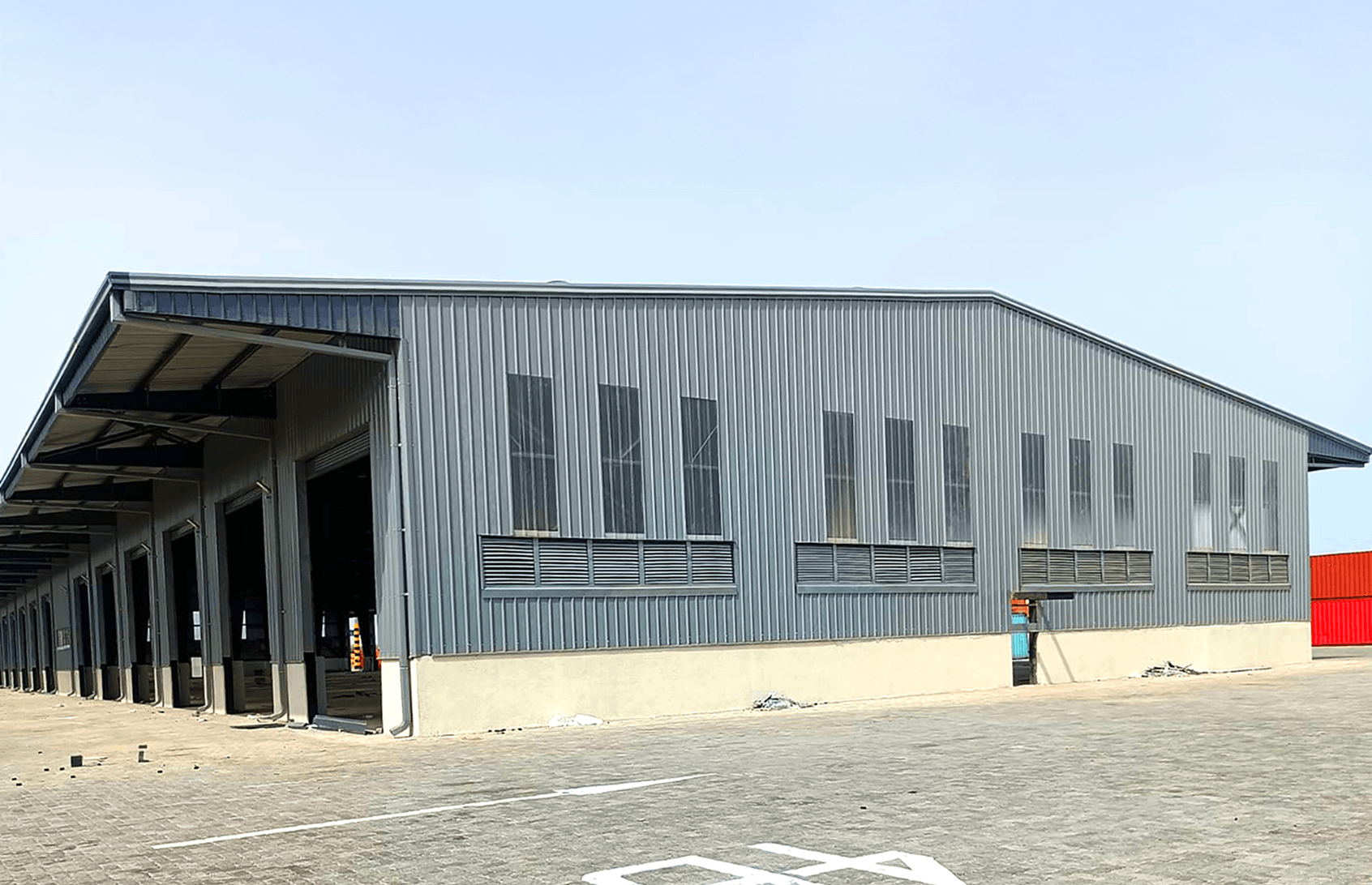
Pre-engineered buildings (PEBs) stand out for their speed, cost-effectiveness, and adaptability, making them ideal for warehouses, factories, and commercial spaces.
As pioneers in the field of Pre-Engineered Buildings in India, we are witnessing a transformative era in construction. The demand for efficient, durable structures is soaring, driven by rapid urbanization and industrial growth. Pre-engineered buildings (PEBs) stand out for their speed, cost-effectiveness, and adaptability, making them ideal for warehouses, factories, and commercial spaces. In this blog, we delve into key trends that are redefining the industry, including quality certifications, technological advancements, global expansion, and eco-friendly practices.
Exploring a reliable Pre-Engineered Buildings Manufacturer, know how these insights highlight PEBs are setting new benchmarks.
One of the most significant trends in Pre-Engineered Buildings in India is the adoption of international quality certifications like the American Institute of Steel Construction (AISC) standards. AISC certification emphasizes rigorous quality control in steel fabrication, ensuring structures meet global benchmarks for safety and durability. This certification process involves independent audits, focusing on error prevention rather than correction, which directly elevates the overall quality of PEBs.In India, where PEBs are increasingly compared to local IS codes, AISC offers advantages in optimizing material use and structural strength. This is particularly beneficial where precision in fabrication prevents issues like leaks or structural failures over time.
Being AISC certified, we have seen firsthand how integrating AISC principles improves project outcomes. Key impacts include:
As a pre-engineered buildings manufacturer committed to excellence, we prioritize such certifications that stand the test of time.
Automation is revolutionizing the fabrication process in pre-engineered buildings are made in India, enabling faster production without compromising quality. With the integration of AI, CNC machines, and robotic welding, manufacturers can cut production time by 30-40% compared to traditional methods. This trend is crucial for meeting the growing demand in sectors like logistics and manufacturing, where quick turnaround is essential.
In our operations, automation handles cutting and joining steel beams parts. Advanced roll-forming technologies and IoT-enabled monitoring ensure precise cuts and welds, reducing human error and material waste. For example, automated drilling and assembly lines allow for customized panels to be produced at scale, enhancing efficiency.
The benefits of this trend are multifaceted:
By embracing these technologies, we are accelerating production and positioning pre-engineered buildings in India as a global leader in innovative construction.
The export sector for pre-engineered buildings in India is experiencing remarkable growth, fueled by competitive pricing and high-quality manufacturing. India's PEB market is projected to expand at a CAGR of over 11% until 2030, with exports playing a pivotal role. In 2025, the market value reached USD 2.3 billion, expected to climb to USD 6.5 billion by 2034, driven by demand from regions like the Middle East, Africa, and Southeast Asia.
International collaborations are key to this surge. Indian manufacturers are partnering with global firms for technology transfers and joint ventures, enhancing capabilities in the businesses. These alliances bring in advanced design software and sustainable practices, making Indian PEBs more appealing overseas.
We are proud to contribute to this expansion, leveraging our expertise as a pre-engineered buildings manufacturer to foster global ties and drive industry progress.
Sustainability is at the forefront of trends in Pre-Engineered Buildings in India, with recycled steel emerging as a cornerstone for eco-friendly construction. Steel's 100% recyclability allows for multiple reuses without quality loss, significantly cutting carbon emissions compared to virgin steel production. In PEBs, this translates to structures that minimize environmental impact while maintaining strength.
At MBEL, we integrate recycled steel into our processes that are both innovative and environmentally responsible, ensuring a brighter future for construction.
A new trend is using Building Information Modeling (BIM) in pre-engineered buildings in India. BIM is digital tech that plans and manages builds better. It creates 3D models to spot issues early, cut costs, and speed work.
In India, BIM helps teams work together from design to setup. It makes sure parts fit perfectly and reduces site changes. For big projects like factories, it saves time and money.
We add BIM to our process as a pre-engineered buildings manufacturer to make smarter, faster builds.
With more earthquakes in some areas, seismic design is rising in pre-engineered buildings in India. This uses special methods to make structures flexible and strong against shakes. Light steel frames in PEBs absorb energy well. In high-risk zones, rules push for these features. It keeps people safe and cuts damage. Key parts:
We focus on seismic trends to build safe pre-engineered buildings for India's needs.
The landscape of Pre Engineered Buildings in India is evolving at an unprecedented pace, with trends like AISC certification, automation, exports, green steel, BIM, and seismic design lead to better, greener structures. As we continue to innovate, these developments enhance efficiency and quality and position India as a global powerhouse in manufacturing.
The world of pre-engineered buildings in India is changing fast. Trends like AISC quality, automation, exports, green steel, BIM, and seismic design lead to better, greener builds.
These help India become a top maker.For warehouses or offices, PEBs give great speed, savings, and eco benefits. Contact us at MBEL to see how these trends can help your project.